Generating leads as an electrical contractor can be challenging, especially since most homeowners only call an electrician when something breaks. To consistently attract new customers, focus on building a strong online presence and responding quickly to inquiries. Here’s how you can do it:
- Claim and Optimize Your Google Business Profile: Complete your profile with accurate details, service areas, and photos. Verified profiles get 5x more views.
- Use High-Intent Keywords: Target specific searches like "EV charger installation near me" or "24-hour electrician."
- Build a Fast, Mobile-Friendly Website: Create individual pages for each service and ensure your site loads in under 3 seconds.
- Leverage Online Directories and Reviews: Claim profiles on platforms like Yelp and Angi, and encourage customers to leave reviews.
- Focus on SEO for contractors: Create city-specific landing pages and use schema markup to boost local search visibility.
- Run Paid Ads for Quick Results: Use Google Ads and Local Services Ads to target urgent leads, like emergency repairs.
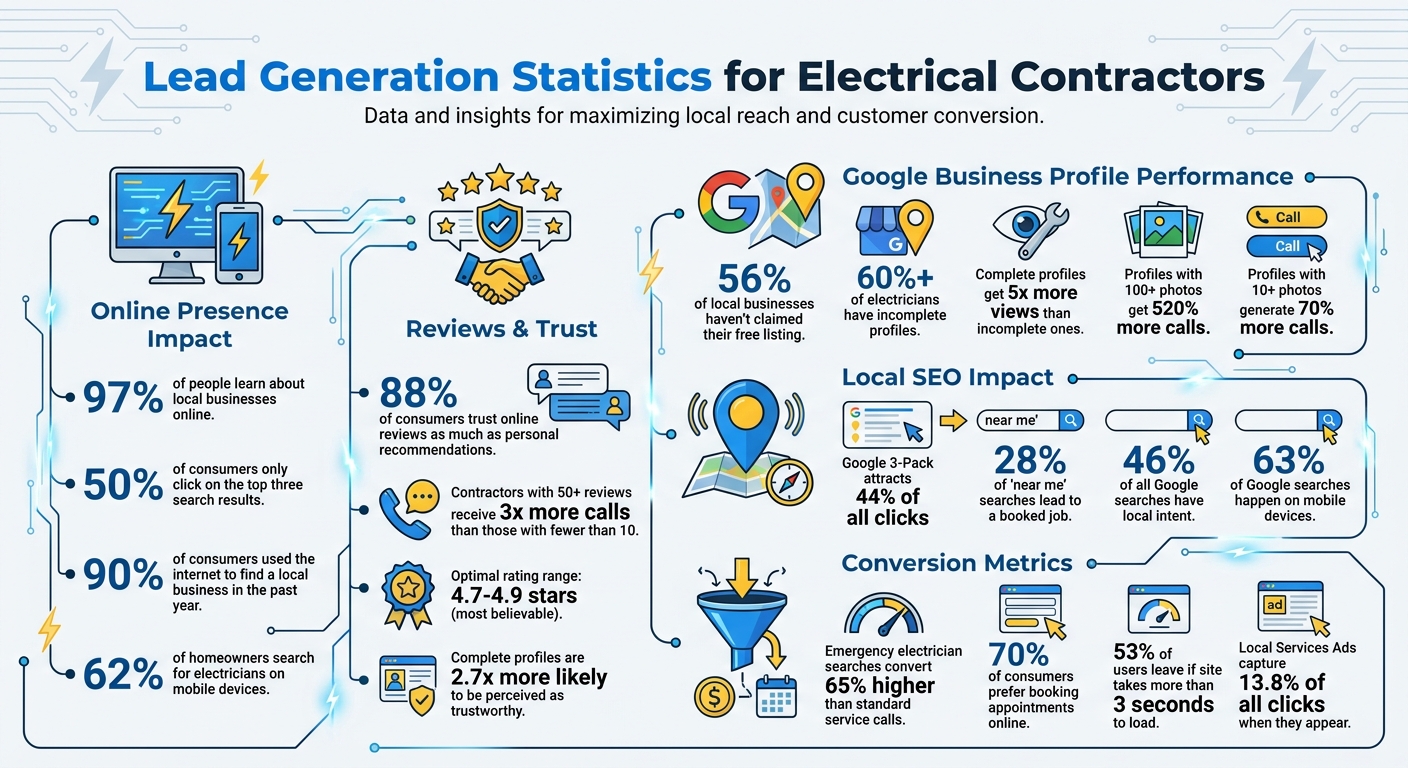
Lead Generation Statistics for Electrical Contractors: Key Metrics and Conversion Data
How Electricians Can Build Predictable Leads Every Month in 2026
sbb-itb-c45215a
Optimize Your Google Business Profile
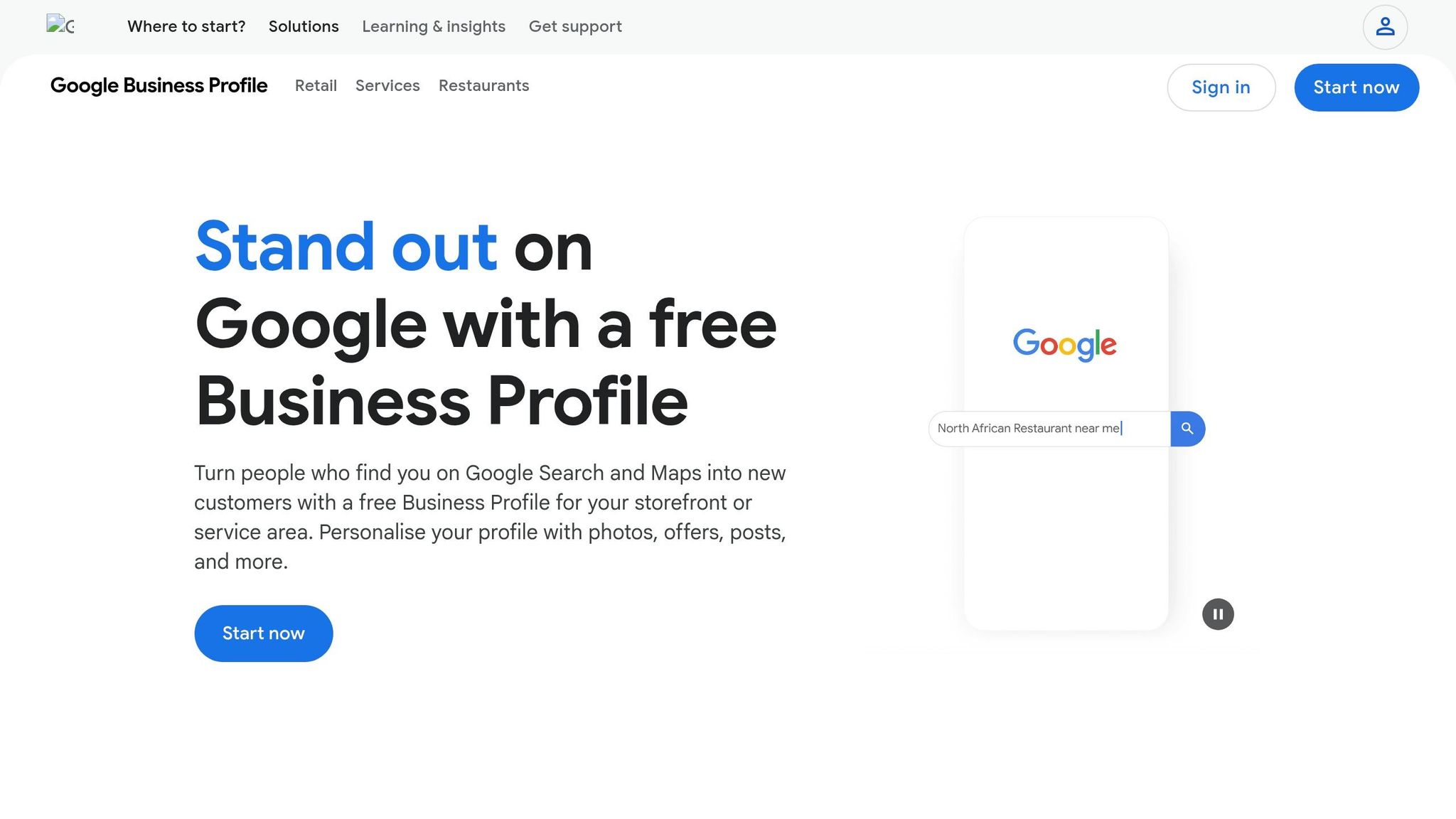
Making the most of your online presence is crucial for turning urgent searches into actual leads. A well-maintained Google Business Profile ensures you show up when homeowners are in immediate need of an electrician. Here’s a startling fact: 56% of local businesses haven’t even claimed their free listing, and over 60% of electricians have incomplete profiles. Don’t miss out – follow these steps to fully optimize your profile and attract more customers.
Start by searching for your business name on Google Maps. If a listing exists, click "Claim this business." If not, head over to business.google.com and create one using a dedicated Google account for your business. Verification is required – Google will send a postcard with a code to your business address (this typically takes 5–14 days). Alternatively, you may qualify for instant verification via phone, email, or Google Search Console. Remember, complete profiles get 5x more views than incomplete ones, so this step is worth the effort.
Claim and Verify Your Profile
Verification is straightforward if you carefully follow the process. Use your exact legal business name to avoid potential suspension. If your work is off-site, use the "Service Area" feature to list up to 20 specific cities or zip codes instead of displaying your home address. While waiting for postcard verification, do not edit your business name, category, or address – making changes will void the code and force you to start over.
Add Keywords and Service Details
Set "Electrician" as your primary category. Then, include secondary categories like "Emergency Electrician" or "Lighting Contractor" to reach a broader audience. For your business description (750 characters max), include your city name, key services like "panel upgrades" and "EV charger installation", and highlight 24/7 availability if you offer it. Use keywords that reflect what homeowners are actually searching for, such as "GFCI outlet installation", "aluminum wiring repair", or "circuit breaker repair." It’s worth noting that emergency electrician searches convert 65% higher than standard service calls, so make sure to emphasize your availability for urgent jobs.
Use Photos and Service Updates
Photos can significantly boost engagement. Profiles with 100+ photos get 520% more calls than the average. Upload images that showcase your branded trucks, team members in uniform, and before-and-after shots of completed projects like rewiring or panel upgrades. Enable geotagging on your photos to strengthen local relevance. Aim to post 3–5 new photos every week and publish a Google Post weekly. Share updates like safety tips, recent projects, or seasonal reminders such as "Inspect outdoor lighting before winter." Regular updates not only keep your profile active in Google’s algorithm but also show potential customers that your business is thriving and engaged.
Conduct Trade-Specific Keyword Research
The right keywords can make all the difference in generating leads. High-intent keywords – those search terms that show a user is ready to hire – are especially effective for attracting qualified customers. These typically pair a specific service with a location or urgency modifier, like "EV charger installation Miami" or "24-hour electrician near me." Such keywords signal immediate service needs, which is critical when you consider that 90% of consumers used the internet to find a local business in the past year, and 62% of homeowners search for electricians on mobile devices. Targeting these terms helps capture local, urgent demand, especially when organic rankings are key. Emergency keywords like "electrical emergency" often cost between $2–$3 per click, making organic traffic a cost-effective alternative. To find these keywords, reliable tools are your best friend.
Identify High-Intent Keywords
Start with tools like Google Keyword Planner to uncover what people in your area are searching for. Simply input terms like "electrician" or "panel upgrade" along with your city to get insights into local search volumes. Don’t overlook Google’s "People Also Ask" and "Related Searches" sections – these reveal the pressing questions homeowners are asking.
Focus on urgency-related keywords to attract emergency leads, such as "tripped breaker", "power outage repair", or "24/7 electrician." Additionally, target specialized services with higher profit margins, like "whole house surge protector installation", "GFCI outlet testing", or "landscape lighting installation in Austin." Long-tail keywords like these often face less competition and convert better because they align with specific customer needs.
"Pages that cover less common electrical services, like generator and EV charger installation, have worked well for them. They stand out to clients and have helped us get more work."
– Angel Garcia, Owner, S4 Electric LLC
This research lays the groundwork for weaving these keywords naturally into your website content.
Integrate Keywords Into Your Content
Once you’ve identified the right keywords, it’s time to seamlessly incorporate them into your website. Start by using your primary keyword in key areas like the page title (H1 header), meta description, and URL. For example: yourcompany.com/ev-charger-installation-denver. Then, include related long-tail keywords in H2 and H3 headers, such as "Tesla Charger Installation" or "Level 2 EV Charging Setup."
Don’t forget to optimize images. Rename image files to reflect the content (e.g., electrical-panel-upgrade-austin.jpg) and add descriptive alt text, like "Licensed electrician installing a new 200-amp breaker panel." Consider creating dedicated service pages for each high-value offering instead of cramming everything onto one generic page. For instance, a standalone page for "GFCI Outlet Testing" can better target niche searches.
Finally, use internal links strategically. Link from related blog posts – like "Signs Your Panel Needs an Upgrade" – back to your main service pages. This not only reinforces your site’s authority on specific topics but also improves navigation for users. By following these steps, you’ll elevate your SEO strategy, setting the stage for more advanced local SEO techniques in the next sections.
Build an SEO-Friendly Website
Once you’ve infused your content with high-intent keywords, the next step is ensuring your website can turn that traffic into leads. Your website is the centerpiece of your lead generation strategy. Did you know that 97% of people learn about local businesses online rather than through other sources? Plus, 50% of consumers only click on the top three search results. This means your website must be fast, mobile-friendly, and structured for search engines to easily navigate. A well-designed site doesn’t just look good – it works 24/7 to attract and convert qualified leads.
With your keywords in place, an optimized website – focused on speed, mobile usability, and local relevance – becomes your most powerful tool for turning visitors into customers.
Create Service-Specific Pages
Instead of cramming all your services onto one overcrowded page, dedicate individual pages to each service. For instance, pages like "Whole House Rewiring", "Landscape Lighting Installation", or "GFCI Outlet Testing" allow you to target specific high-intent keywords while offering detailed information tailored to what potential customers are searching for. This strategy avoids internal competition between your pages in search results and creates more opportunities to rank.
Each service page should include:
- A clear H1 title
- Concise service descriptions and transparent pricing
- High-quality images
- A strong call-to-action (CTA)
For immediate conversions, add a click-to-call button at the top of the page. Since 70% of consumers prefer booking appointments online, keep your mobile contact forms simple – no more than five fields – to make it easy for users, especially during emergencies.
Optimize for Mobile and Speed
Mobile searches dominate, accounting for over 65% of all searches, particularly during emergencies. If your site takes more than three seconds to load, 53% of users will leave and look elsewhere. Speed isn’t just about keeping users happy; Google’s mobile-first indexing means your site’s mobile performance directly impacts your search rankings.
To improve your site’s speed, use tools like Google PageSpeed Insights to identify issues. Focus on:
- Compressing large images
- Enabling browser caching
- Removing unnecessary plugins
Aim for a Largest Contentful Paint (LCP) under 3 seconds and a First Contentful Paint (FCP) under 1 second. These metrics ensure your site loads quickly and keeps visitors engaged.
Add Local Schema Markup
Schema markup helps search engines understand your business and its offerings. For electrical contractors, use the LocalBusiness schema (with the "Electrician" subtype) to provide structured data like your business name, address, phone number, hours, and service areas. You can also use Service schema to highlight specific offerings, such as panel upgrades or emergency repairs. Adding FAQPage schema can help you rank for common questions like "Why do my lights flicker?".
Structured data improves how search engines display your business in search results, increasing your visibility in rich snippets, map packs, and even voice search. Many website platforms offer schema plugins, or you can use Google’s Structured Data Markup Helper to create the code. This extra step can boost your click-through rates and help you stand out in search results.
Use Online Directories and Reviews
After fine-tuning your website and local SEO strategies for electricians, the next step is managing online directories and reviews. Why? Because 97% of people search for local businesses online, and 88% trust reviews as much as personal recommendations. When homeowners look for an electrician, they’re likely comparing multiple options across different platforms. If your business isn’t listed or doesn’t have reviews, you could be missing out on potential customers.
Here’s an eye-opener: complete profiles get five times more views than incomplete ones, and electrical contractors with over 50 reviews receive three times more calls than those with fewer than 10. The key is to show up where your audience is searching.
Claim Profiles on Key Directories
Start by claiming and fully optimizing your profiles on platforms like Google Business Profile, Yelp, and Angi. Each serves a unique purpose – Google is essential for map-based searches, while platforms like Angi connect you directly with homeowners seeking specific services.
Consistency is critical. Your NAP (Name, Address, and Phone number) must be identical across all directories. Even minor differences, like "St." versus "Street", can confuse search engines and hurt your rankings. To avoid this, create a master document to keep your business details consistent everywhere. Fill out every field, from your services (like panel upgrades or EV charger installations) to business hours and service areas.
Want to stand out? Add at least 10 high-quality photos to your profiles – team shots, branded vehicles, or examples of completed projects. Profiles with 10+ photos generate 70% more calls. Enable messaging features on platforms like Yelp and Google to cater to customers who prefer texting over phone calls. Lastly, schedule quarterly audits to remove duplicate listings and update outdated information.
Once your profiles are set, managing reviews becomes your next priority.
Encourage and Manage Reviews
Reviews aren’t just nice to have – they’re essential. Make requesting feedback a standard part of your workflow. Train your technicians to ask for reviews immediately after finishing a job, then follow up within 48 hours via text or email with a direct link to your review profile.
Take it a step further with QR codes on invoices or by using automation tools like Housecall Pro or ServiceTitan to send review requests right after the job is done. Aim for a rating between 4.7 and 4.9 stars, as this range feels more believable to consumers compared to a perfect 5.0, which can sometimes look suspicious.
Responding to reviews is just as important as collecting them. Reply to all reviews within 24–48 hours. For positive feedback, thank the reviewer by name and mention the specific service you provided. For negative reviews, stay professional: acknowledge their experience, apologize if necessary, and invite them to contact you directly. Handling complaints well can build trust even more effectively than a string of perfect ratings.
Implement Local SEO Tactics
Optimizing your directories and reviews is just the beginning of boosting your local visibility. Here’s why local SEO is essential: 97% of consumers turn to the internet to find local businesses, the Google 3-Pack attracts 44% of all clicks, and 28% of "near me" searches lead to a booked job. These stats highlight the importance of making your business easy to find online.
To get started, focus on creating detailed, location-specific content to show Google exactly where you operate and what services you offer. Ivan Vislavskiy, CEO of Comrade Digital Marketing Agency, emphasizes this point:
"Many electrical businesses try to rank with just a homepage and a few generic service pages, but the real gains come when you build separate, optimized pages for each city or neighborhood you serve".
Create City-Specific Landing Pages
For each city, town, or neighborhood you serve, build a dedicated landing page. These pages should target service-location keyword combinations like "Electrician in Springfield" or "EV Charger Installation in Springfield" to attract high-intent local traffic.
Make these pages more than just placeholders. Include content tailored to the area, such as discussing unique local electrical issues – e.g., "Common Electrical Issues in Springfield’s Historic Homes" – to establish your expertise in that community. Add photos of completed projects in the area and testimonials from local customers to build trust and credibility. Embedding a Google Map on each page helps confirm your service area, and applying the LocalBusiness schema further strengthens your local relevance.
Consistency is key. Ensure your NAP (Name, Address, Phone Number) is identical across all landing pages. If you serve a large number of locations, programmatic SEO tools can help you scale location-specific content efficiently.
Embed Google Maps and Optimize On-Page SEO
Adding a Google Map to your location pages is a simple yet effective way to enhance your local presence. Link the map directly to your verified Google Business Profile to maintain accurate and consistent data. If you serve multiple areas, embed maps on each city-specific page instead of relying solely on your homepage.
On-page SEO is equally important. Use local keywords in your page titles, like "Licensed Electrician in Denver | Same-Day Appointments". Stick to one H1 tag per page, focusing on your primary keyword, and structure additional content with H2 and H3 tags. Optimize images with descriptive file names (e.g., electrical-panel-upgrade-denver.jpg) and use alt text to improve accessibility and search visibility.
With 63% of Google searches happening on mobile devices, a responsive design is non-negotiable. Make sure your site performs well on mobile and includes clear, actionable buttons like "Call Now" or "Get Directions" near your embedded map. These features cater to users ready to act, turning visitors into leads. For instance, WebFX helped Asbury Electric achieve a 50% year-over-year increase in local search impressions by fixing technical issues and fine-tuning their Google Business Profile with accurate service categories like "24-Hour Electrician".
Use Paid Ads for Quick Leads
If you’re an electrical contractor looking for immediate results, paid advertising can be a game-changer. While SEO is great for building long-term visibility, platforms like Google Ads give you instant exposure by placing your business right at the top of search results – without the months-long wait. This approach is perfect for generating leads quickly and works hand-in-hand with your long-term SEO strategy.
To make the most of paid ads, focus on high-intent keywords like "emergency electrician near me" or "panel upgrade cost." These attract users who are ready to hire right now. Two types of ads are especially effective in this industry:
- Search Ads (PPC): You pay per click, and these ads appear just below Local Services Ads.
- Local Services Ads (LSAs): These operate on a pay-per-lead model and are positioned at the very top of Google’s search results. LSAs capture 13.8% of all clicks when they appear.
Set Up Google Ads and Local Services Ads
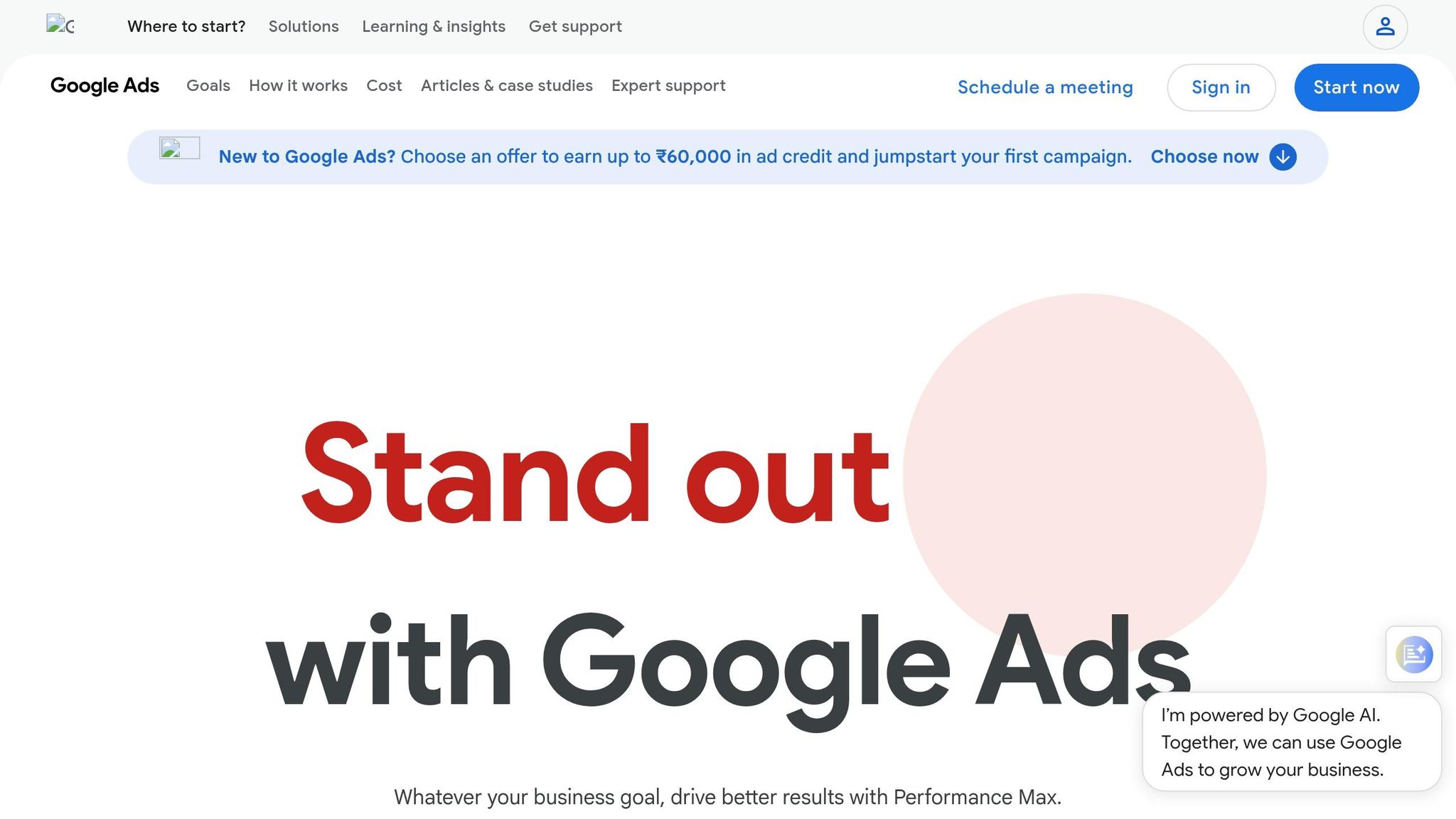
To get started, allocate a daily budget of $50–$100. Keywords in the electrical field typically cost $5–$20 per click, while LSAs run between $20 and $55 per lead as of 2026. Smaller businesses might spend $1,500–$2,000 per month, while larger operations often invest $3,000 or more to maintain a steady flow of leads.
For Search Ads, prioritize emergency and high-value services. Keep emergency ads running 24/7, but schedule non-urgent ads during business hours when someone can answer calls. Use negative keywords like "DIY", "how to", and "jobs" to avoid wasting money on irrelevant clicks. Enhance your ads with sitelink, call, and location extensions to provide more information and make your ad stand out on the page.
For Local Services Ads, speed is critical. Google’s "Google Verified" badge (introduced in late 2025) shows that your license, insurance, and background checks are up to date. Fast response times are rewarded by the algorithm, so aim to reply to leads within 15 minutes. Select all the services you offer – Google doesn’t automatically pull this information from your website. If you install EV chargers, make sure to highlight it in your profile and include photos since this service isn’t categorized separately.
| Ad Type | Payment Model | Placement | Best For |
|---|---|---|---|
| Search Ads (PPC) | Pay-per-click | Below LSAs | Targeting specific services |
| Local Services Ads | Pay-per-lead | Top of SERP | Emergency calls & local work |
Optimize Landing Pages for Conversions
Once your ads are live, the next step is converting clicks into leads. Sending paid traffic to your homepage? Bad idea. As Blue Grid Media puts it:
"If you are sending Google Ads traffic to your homepage, you are wasting 40 to 60% of your clicks. Your homepage serves 10 purposes. A landing page serves one: getting the visitor to call you or fill out a form".
Instead, create dedicated landing pages tailored to each ad. For example, if your ad promotes "AC Repair in Dallas," the landing page headline should match that exact service. Include a clickable phone number at the top for one-touch dialing. Keep contact forms simple, with just 3–5 fields (name, phone, email, and service needed).
Boost trust by prominently displaying license numbers, insurance details, BBB ratings, and the Google Verified badge. Adding 3–5 recent Google reviews above the fold can also reassure potential customers. Lastly, make sure your landing page loads in under 3 seconds – just a one-second delay can lower conversions by 7%.
Here’s a success story: An electrical contractor in Austin revamped their website to focus on emergency services and local targeting. The results? A 127% increase in phone calls, an 85% rise in emergency bookings, and conversion rates that hit 28%. Monthly qualified leads jumped from 45 to 89 – all without additional marketing spend.
Partner with Contractor SEO Agency for Expert Help
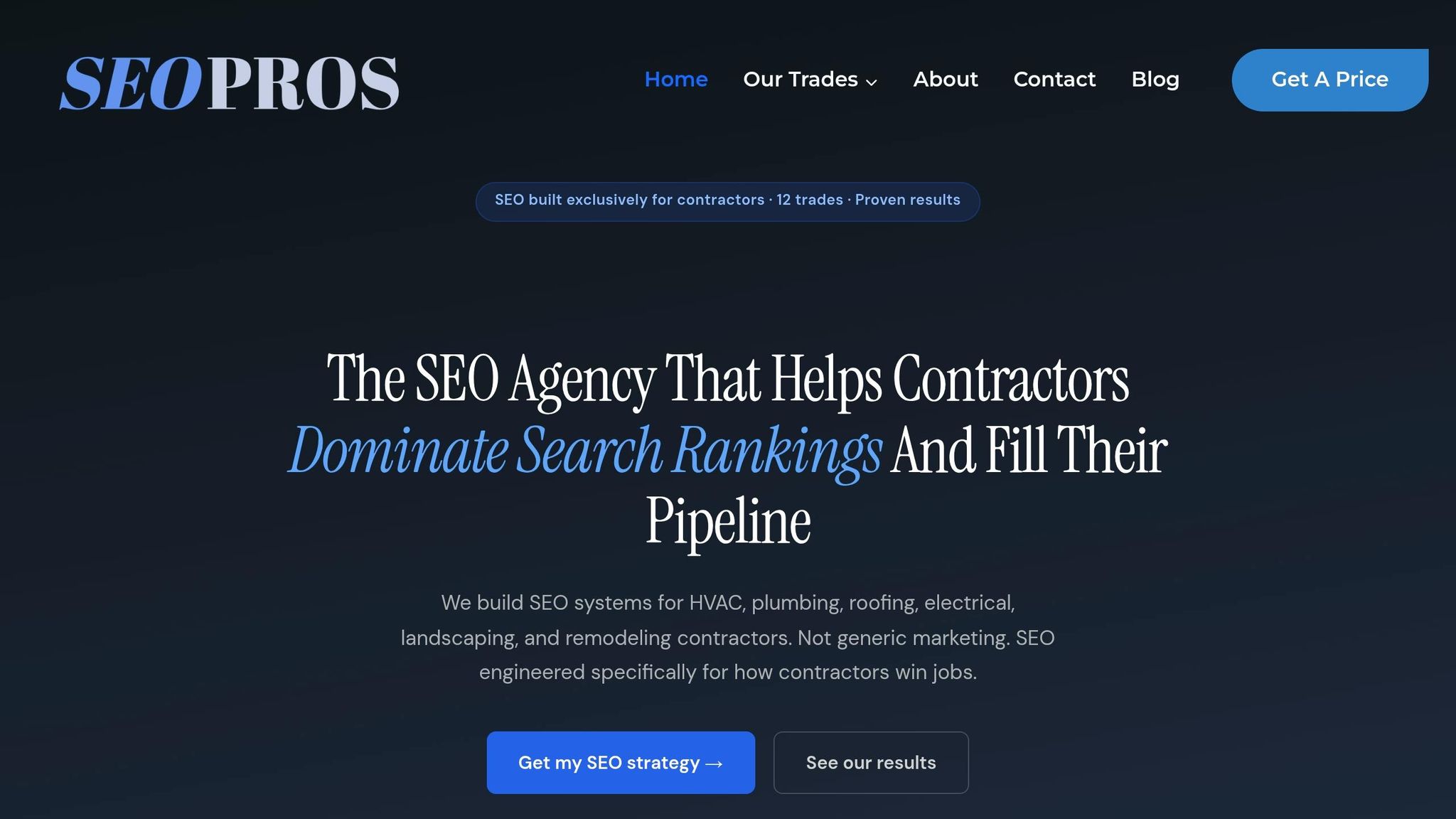
Once you’ve implemented local SEO and paid ad strategies, it might be time to bring in experts to manage these efforts for you. Handling SEO alongside service calls, estimates, and crew coordination can quickly become too much to juggle. Most electrical contractors simply don’t have the bandwidth to keep up with algorithm changes, technical updates, or ongoing keyword research. That’s where a specialized agency comes in – allowing you to focus on your licensed trade while professionals enhance your online presence.
Trade-Specific SEO Services
Contractor SEO Agency takes a tailored approach to the challenges electrical contractors face. Instead of relying on generic keywords like "electrician," they focus on high-intent searches such as "emergency electrician," "panel upgrades," and "EV charger installation." These precise terms attract customers who are ready to schedule services – not just browsing.
Their strategies also include targeted schema markup, which helps search engines better understand your services and service areas. With nearly half (46%) of all Google searches having local intent, this work ensures your business appears when someone nearby needs immediate help. Additionally, they optimize your Google Business Profile, which is essential for appearing in the Local Pack. Fully optimized profiles are 2.7 times more likely to be perceived as trustworthy by potential customers.
The agency goes beyond technical fixes by creating city-specific landing pages and managing your reputation. They automate review requests and craft professional responses, which boosts your credibility. This kind of social proof directly influences whether a searcher turns into a paying customer.
Pricing and Results
Contractor SEO Agency offers plans starting at $1,500 per month, with no long-term commitments – services are provided on a month-to-month basis. They also provide a free SEO audit upfront, which includes a keyword gap analysis and competitor review to pinpoint where you’re losing potential leads. Pricing depends on your market size, with most contractors spending between $500 and $5,000 monthly.
Results typically start to show within 3–6 months, with more Map Pack appearances, increased calls, and a steady stream of qualified leads. Unlike paid ads, which stop generating traffic as soon as you pause your budget, SEO builds a lasting presence. This makes it a more sustainable investment compared to the $10,000+ monthly ad budgets some contractors allocate. These strategies ensure long-term visibility while complementing the SEO efforts you’ve already implemented.
Conclusion
To maximize your lead generation as an electrical contractor, focus on building a strong online presence. Why? Because 97% of people turn to the internet to find local businesses. The strategies outlined here – like optimizing your Google Business Profile, creating service-specific pages, and managing reviews – reflect how homeowners search for and hire electricians today.
Allocating $500 to $5,000 per month or 5–8% of your total revenue can create a sustainable lead generation system. Unlike paid ads, which stop driving results as soon as the budget is exhausted, SEO delivers long-term benefits. You might notice early gains within 30–90 days, but consistent leads typically flow in after 3–6 months.
Consistency is key. Keep your Google Business Profile updated with at least 20 professional photos, ensure your website loads in under 3 seconds on mobile, and prominently display your license numbers. These small but critical details build trust. And trust matters – 88% of consumers trust online reviews as much as personal recommendations. Every touchpoint with a potential customer reinforces your reliability and professionalism.
FAQs
How long does SEO take to start generating electrician leads?
SEO for electricians usually starts delivering leads within 3 to 6 months. The timeline can depend on factors like how effectively the strategy is implemented and the level of competition in your area. Outcomes also hinge on how closely the SEO plan matches your business objectives and the demand in your market.
Should I prioritize Google Local Services Ads or Google Search Ads first?
In 2026, kicking things off with Google Local Services Ads is a smart move for generating leads quickly. These ads are designed to connect you directly with local customers who are actively searching for your services. Plus, with a pay-per-lead model, you’re only paying for actual results, making it an efficient way to get started.
While Google Search Ads can help build a stronger online presence over time, starting with Local Services Ads ensures your schedule fills up faster. Organic SEO, while effective, often requires patience before delivering noticeable results.
What’s the fastest way to get more 5-star reviews without being pushy?
To get more 5-star reviews without coming across as pushy, timing is everything. Ask happy clients for feedback right after you’ve completed a job – when their satisfaction is at its peak. Prioritize delivering top-notch service, and make leaving a review effortless by providing clear instructions or a direct link to your Google Business Profile. This approach naturally encourages honest, positive reviews without making anyone feel pressured.